General News
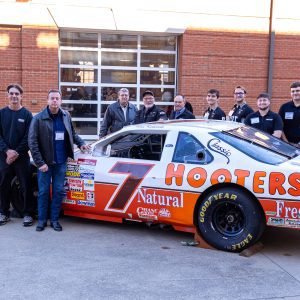
UNC Charlotte commemorates NASCAR driver, engineer and inspiration Alan D. Kulwicki
UNC Charlotte celebrated national championship NASCAR driver Alan Kulwicki on December 14, what would have been his 69th birthday. The William States Lee College of Engineering motorsports students hosted “Underbird Rising – Alan D. Kulwicki Legacy Lunch” to commemorate the impact made on Niner Nation.
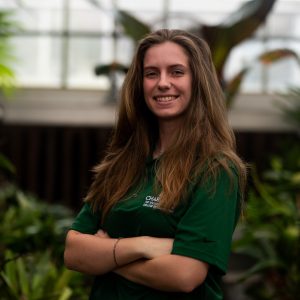
Meet Niner Engineer Summer Prentice
Hear directly from Civil Engineering student Summer Prentice about one of her favorite campus activities, ASCE.

From First Year to First Job: The 5 Tools Used by a Niner Engineer
Niha Chandekar, B.S. in Computer Engineering
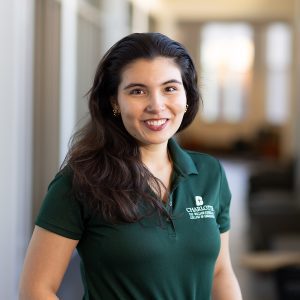
Impacts — from batteries to career choices
Sofia Verdi, B.S. in Mechanical Engineering
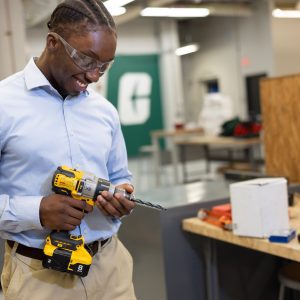
Gathering real-world data — and experience
Jabrail McBride, B.S. in Mechanical Engineering
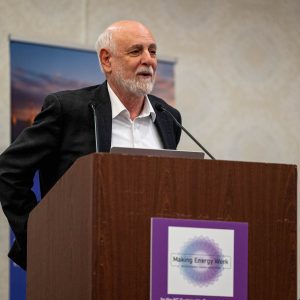
CLEANcarolinas inaugural workshop features NSF Innovation Engines Program Director
Forum sets bar for NSF Regional Innovation Engines community engagement
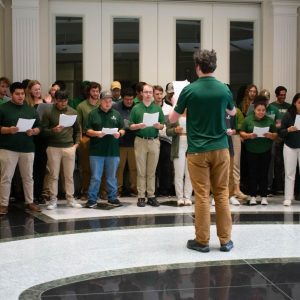
Multi-disciplinary concert brings music to unexpected corners of campus
How a civil engineering student concert showcases a push for internationalized learning at UNC Charlotte

Expert hydrologist joins UNC Charlotte to steer solutions for built and natural environments
William States Lee College of Engineering welcomes Glenn Moglen, seasoned researcher and respected leader, as chair of the Department of Civil and Environmental Engineering. He began his role at UNC Charlotte fall semester 2023.
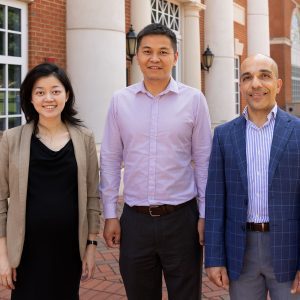
First phase of ‘Engineering North Carolina’s Future’ faculty additions amplify Charlotte’s groundbreaking research efforts
The “Engineering North Carolina’s Future” initiative, backed by transformative investments by the N.C. General Assembly, has ignited a surge of teaching and research excellence at UNC Charlotte. As part of its plan to use this investment, the W.S. Lee College of Engineering has expanded its capabilities with an initial recruitment of three new faculty members.
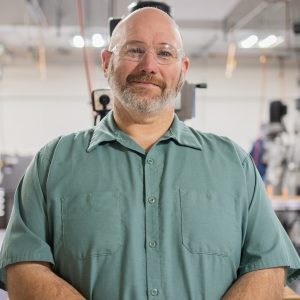
“It can’t be done” isn’t in the Niner Engineer playbook
Sarah Stellwagen, assistant professor in the Department of Biological Sciences within the College of Science, had an issue. The microscopic spiderwebs she researches are best studied in their native environment—or at least under the right conditions, which include temperature and humidity. But it wasn’t easy to get accurate readings with her microscope in the lab, whose temperature is often stuck at around 70°F with humidity that can fluctuate dramatically depending on the weather.